Why a Door Handle Can Tell You Where to Push
Learn how a door handle signals where to push, spot confusing cues and choose small design changes that make the intended action easier to read.
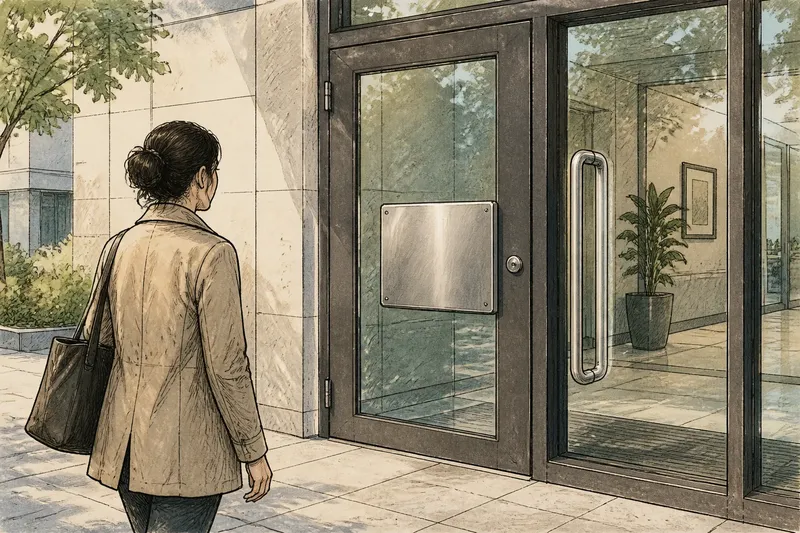
You reach a door with a flat metal plate, press the round knob beside it, and nothing happens. The door opens only when you push the plate. That small mismatch is a door-handle design problem: the shape and position of the hardware have not made the intended action clear.
A door handle tells you where to push through its form, its location and the way it moves. When those cues agree, people can act without stopping to inspect the door. When they conflict, visitors may pull a push door, press a fixed panel or hesitate at the threshold. The useful fix depends on what is causing the confusion.
Start by identifying the action the hardware suggests
A lever invites a hand to grip and move it; a broad, flat plate often suggests pushing with a palm. A pull handle offers somewhere to wrap the fingers, while a small round knob can suggest turning. These are familiar conventions, not universal rules, so consider the whole door rather than treating one piece of hardware as a complete instruction.
Position matters too. A plate placed where a hand naturally lands can support a push action. A projecting handle on the same side may suggest pulling instead. A clear design makes the intended contact point easy to distinguish from decorative fittings, keyholes and other hardware.
Before changing anything, watch the interaction from a respectful distance in an ordinary setting. Notice which part people touch first, whether they pause, and whether they need to try a second action. Look at the door from the approach direction, since a cue visible from the other side may not help someone arriving at it.
People pull when the door is meant to be pushed
A projecting handle on the approach side is a common reason. Its shape offers a grip, and the hand tends to read that grip as something to pull. A polished plate beside it may not overcome the stronger cue of a handle that stands proud of the surface.
First check whether the handle is needed on that face. If it is not, removing or changing the misleading fitting may make the push plate more obvious. If the fitting has to remain, consider whether it can be made visually quieter or positioned so it does not compete with the plate.
Then make the push surface distinct. A broad plate, a contrasting finish, or a clear contact area can give the palm an obvious destination. Keep the cue close to the point where the door is intended to move; a decorative strip elsewhere is unlikely to read as an instruction.
Say you are reviewing an office door with a shiny vertical pull and a small push plate. Imagine replacing the pull with a flush fitting and giving the plate a more noticeable finish. The expected observable result is that an arriving visitor is more likely to place a palm on the plate before trying to pull.
The handle is too small, high or awkwardly placed
Even a correctly shaped handle can be hard to read if it sits away from the natural hand path. People may reach for the nearest edge, press the door surface, or search for a latch. The problem is especially noticeable when a handle is hidden by a frame, a sign or a nearby object.
Look at the door with the approach unobstructed and note where a hand would naturally land. Compare that point with the hardware, then consider whether a larger or more visible contact area would make the action clearer. Avoid adding a second handle simply to create a stronger cue; duplicate fittings can suggest two competing actions.
Check that the handle can be reached and used comfortably by the people who use the door. A design that works for someone standing close to the centre may be less legible to a child, a seated person or someone carrying a bag. For changes to hardware or access arrangements, follow the product instructions and applicable local requirements.
A fixed panel looks as if it should move
Large glass doors can make the problem particularly clear. If both the moving leaf and the fixed panel have matching handles, a person may pull the panel that does not open. The fittings look like a promise of movement, even when only one side is operable.
Make the moving part visually distinct. That could mean using a handle only on the operable leaf, choosing a different fitting for the fixed panel, or marking the boundary between them in a clear way. Keep the difference visible from the direction people approach; a cue on the far side will not prevent the first mistaken reach.
Also inspect reflections and surrounding light. A glass panel can reflect a handle or doorway and make the arrangement harder to interpret. Adjusting the visual contrast or the placement of a sign may help, provided the mark identifies the moving part rather than adding another ambiguous shape.
The handle looks right, but the door does not respond
Sometimes the cue is clear but the hardware is stiff, loose or disconnected from the latch. A person then repeats the action, changes direction or assumes the door is locked. That experience can make a well-designed handle seem misleading.
Notice whether the handle moves freely and whether the door responds consistently. If it feels loose, catches or fails to release the latch, ask a suitable door or hardware professional to inspect it rather than disguising the problem with labels. A visual instruction cannot compensate for a mechanism that does not behave as expected.
Where a door is intentionally locked or restricted, communicate that status with a clear sign placed where it can be seen before someone reaches the handle. Keep the wording direct and avoid placing notices where the handle itself obscures them.
What should you check before changing a handle?
Does the shape invite the intended action?
Ask whether the fitting looks like something to push, pull, turn or slide. If its form suggests a different movement from the one the door requires, change or reduce the conflicting cue.
Can someone see the contact point on approach?
View the door from the route people actually take, not only from directly in front. Move signs or nearby objects that hide the hardware, and make the intended contact area distinct from the surrounding surface.
Do matching fittings make a fixed panel look operable?
Compare the hardware on every panel. If a fixed section carries the same prominent fitting as the moving section, distinguish the two so that the door does not offer a false invitation.
Does the door respond when the handle is used?
Check for sticking, looseness or a latch that fails to release. If the mechanism is unreliable, arrange an appropriate repair before adding visual instructions that could distract from the fault.
Use a small set of cues that agree
Think of the handle as a label made from shape and placement rather than words. Like a drawer pull, it should indicate where a hand belongs and what sort of movement follows. A plate, lever or pull works best when its form, its position and the door’s response all point in the same direction.
When reviewing a confusing door handle, begin with the first mistaken action you can observe. Remove the cue that suggests it, clarify the intended contact point, and check that the hardware works as expected. That sequence keeps the change focused: the door handle should tell a visitor where to push before they need to ask.