The Feature Wall Is Not a Room Plan
A feature wall can give a room a focal point, but a room plan must also account for furniture, clear routes and the activities that share the space.
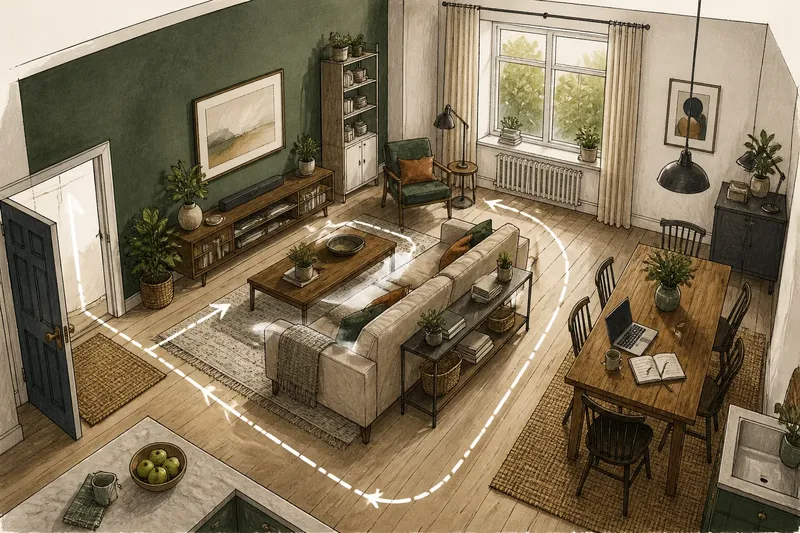
A bold-painted wall can catch your eye as soon as you enter, while the sofa still blocks the route to the window. That is the limit of a feature wall: it can give a room a visual focal point, but it cannot organise furniture, movement or everyday use on its own.
Think of the wall as the cover of a book and the layout as the pages inside. The cover may set the mood; the pages still need to work. These field notes start with what happens in the room, then consider where a striking surface can help rather than distract.
Start with the room’s daily routes
Notice the paths people take before choosing a wall to emphasise. Follow the route from the entrance to the sofa, from the kitchen to the table, or from a desk to a cupboard. A plan that looks composed in a photograph may feel awkward if each trip requires a sidestep around a chair.
Sketch the room simply on paper. Mark doors, windows, radiators, built-in storage and the pieces that cannot easily move. Then draw the routes you use often, including the arc of a door or cupboard as it opens. These marks reveal where furniture may interrupt movement and where a wall is already doing useful work.
Keep a route legible rather than treating every open patch of floor as spare space to fill. A clear approach to a window can matter more than placing a console beneath it; room to pull out a dining chair can matter more than centring the table on a painted wall. The right arrangement depends on the room’s shape and the people using it.
Give furniture a job before it gets a backdrop
Assign each large piece a purpose in relation to the others. A sofa might face a television, a hearth, a view or the people seated across from it. A table needs room for chairs and for the tasks that happen on it. If the purpose is unclear, a dramatic wall may make a misplaced object look intentional without making it useful.
Try a furniture plan before committing to paint or wallpaper. Cut paper shapes to represent the main pieces and move them around a rough room outline. This is not a substitute for checking the actual room, but it makes competing arrangements easier to compare before anything is moved.
Say you have an imaginary sitting room with a sofa facing a painted wall, but the only clear path from the door to the window cuts between the sofa and coffee table. If you shift the table towards the sofa and angle an occasional chair away from the route, the expected visible result is a more direct passage and a seating group that still faces the wall. The colour has not changed; the relationship between the furniture and the route has.
Choose what the feature wall should do
A feature wall can anchor a seating group, give a bed a calm visual background or draw attention to a useful alcove. It works best when its visual emphasis supports an arrangement that already makes sense. Ask what the wall is meant to signal: a place to sit, a place to sleep, a work zone, or a detail worth noticing.
Then check what will actually appear against it. A large print, open shelving, a television or a headboard may cover much of the surface. If the main object already provides the focal point, a saturated colour or busy pattern can compete with it. A quieter finish may let the furniture remain the clearest cue.
Look at the wall from the doorway as well as from the seats. A colour that seems balanced head-on may dominate the room when viewed at an angle, especially if the wall fills the entrance view. A small swatch placed beside the existing floor, curtains and upholstery can help you judge how their colours relate in the room’s ordinary light.
Let the room’s use shape its zones
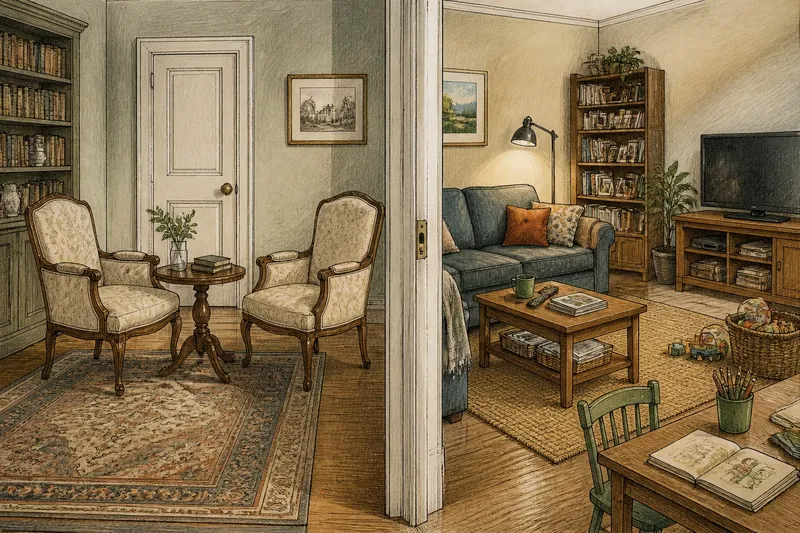
Shared rooms often host activities that need different kinds of attention. A dining table may double as a work surface; a living room may include play, reading and television. Define these zones through position, lighting and storage before relying on a colour change to separate them.
Keep the signs of each activity close to where it happens. A reading chair needs a light and a place for a book; a work surface needs supplies within reach and a way to put them away. A feature wall can mark one zone, but it cannot supply the lamp, storage or working surface that make the zone usable.
Where space is limited, favour furniture that serves more than one purpose only if changing its use is straightforward. A dining table that becomes a desk may need a nearby drawer or basket for work materials. If setting up and clearing away becomes a daily obstacle, the apparent flexibility may not suit the household.
Use colour and pattern with the whole room in view
A strong finish changes how surrounding objects are perceived. Dark paint may make a wall recede in some conditions, while a high-contrast pattern may pull it forward; the effect depends on the colour, light, room and furnishings together. Treat such impressions as something to check in place, not as a fixed rule about how every room will look.
Consider the ceiling, floor and adjoining walls as part of the composition. A feature wall can feel detached if its colour has no relationship to any other surface or object. It need not match the cushions exactly: a repeated hue in a rug, artwork or timber finish can provide a quieter connection.
Pattern scale matters in relation to what sits nearby. A tight, busy print behind a cluster of small frames can make the area feel crowded, while a large motif may be interrupted by a doorway or shelving. Hold samples near the furniture and view them from the places where you usually sit and enter.
How should a feature wall work in a real room?
Should the feature wall be behind the sofa?
It can be, if the sofa’s position makes sense for conversation, movement and the room’s other uses. Check the view from the entrance and make sure the wall does not draw attention away from a more important route or object.
Can a feature wall make a small room feel larger?
It may alter the room’s visual balance, but it cannot create floor space or improve an obstructed route. Test the finish with samples and judge it alongside the furniture, natural light and sightlines.
Should the wall have art or a strong pattern?
Choose one element to lead when both would compete for attention. If the art is the focal point, a restrained wall can frame it; if the wall pattern is the main event, keep nearby decoration simpler.
What should I decide before painting?
Settle the main furniture positions, the routes between important places and the role the wall is meant to play. Then check colour samples in the room beside the materials and objects that will remain there.
Make the final decision from the room, not the sample card
Before buying a finish, put together a temporary version of the proposed arrangement. Move the furniture if practical, or mark its intended edges on the floor with low-tack tape. Place a sample on the chosen wall and look at it from the entrance, from the main seat and from any work or dining position.
Pay attention to what the wall makes easier to understand. Does it clarify where the seating group begins, or pull your eye towards an awkward gap? Does the route remain obvious? If the arrangement needs several visual tricks to make its purpose clear, return to the furniture plan before adding another layer of colour.
A feature wall can finish a room’s composition, but it is not a substitute for one. For a useful room plan, begin with furniture, routes and activities; let the wall reinforce the relationships that already work. That simple order keeps the feature wall from becoming a distraction—and gives the room a purpose beyond the first impression.