From Parlour to Living Room: A Room Changes Its Name
From parlour to living room, learn how each name suggests a different use and choose a clear label for the way your household shares its space.
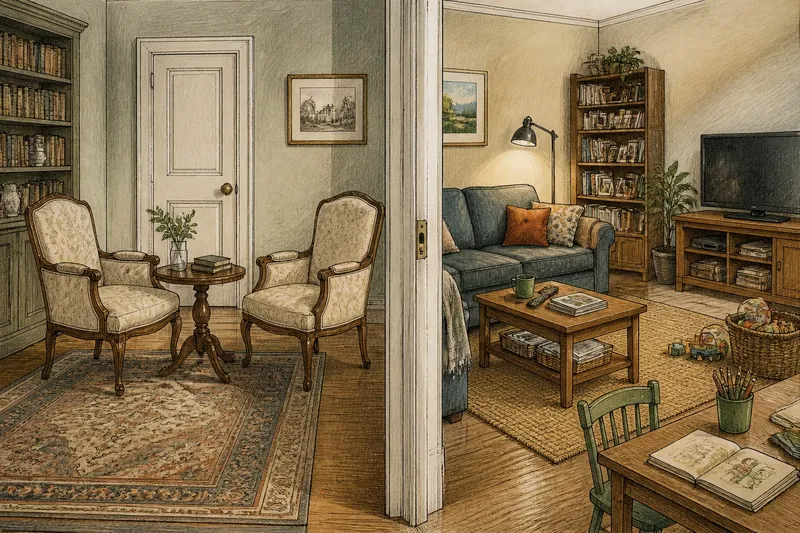
A closed door, two armchairs and a room kept clear of toys can make a front room feel set aside for visitors. In another home, the front room holds the television, a reading lamp and everyday clutter. The contrast helps explain what people may mean by “parlour” and “living room”, though these associations vary by household and cultural context.
From parlour to living room, the change in wording is not a universal historical sequence. Today, the names can suggest different priorities: receiving guests in a more separate space, or making room for daily shared life. The most useful label is the one that tells residents and visitors how the room is meant to work.
Parlour suggests a room set aside for visitors
In common British usage, “parlour” can evoke a room arranged for conversation and formal visits. It need not be grand: a modest space with chairs facing one another can feel suitable for guests without elaborate furniture or decoration.
Use the term if the room is kept apart from cooking, play or television and is mainly used for hosting. For instance, a small table, comfortable chairs and a bookcase can support conversation while leaving a clear route through the room.
Keeping a room separate may offer a quieter place to talk or welcome visitors. It can also leave the space underused if household routines happen elsewhere. The name alone does not create a hospitable room; its layout and the way people use it matter more.
Living room suggests everyday shared use
“Living room” commonly points to a space for ordinary activities: relaxing, talking, reading, watching a programme or spending time alongside other people. It may be carefully furnished, but its expected role is not limited to special occasions.
Choose this name when the room supports changing daily routines. A sofa might face a television, while a reading chair sits near a lamp and frequently used books stay within reach. Visitors can still be welcome; the distinction is that the room serves household life as well as entertaining.
Think of a room name as a label on a storage box: it helps only if it describes what people actually put inside. Calling a space a living room while keeping it closed to everyday use may confuse residents or guests.
Choose the name by observing how the room is used
Notice who uses the room, what they do there and whether it is usually open or reserved. Then choose the clearest term for its main role, rather than a label that simply sounds more formal.
- If the room is opened mainly for visitors, then “parlour” may communicate that role; if residents use it for daily activities too, choose “living room” or explain both uses.
- If chairs face one another and the television is elsewhere, then “parlour” or “sitting room” may fit; if the room centres on varied family routines, “living room” may be clearer.
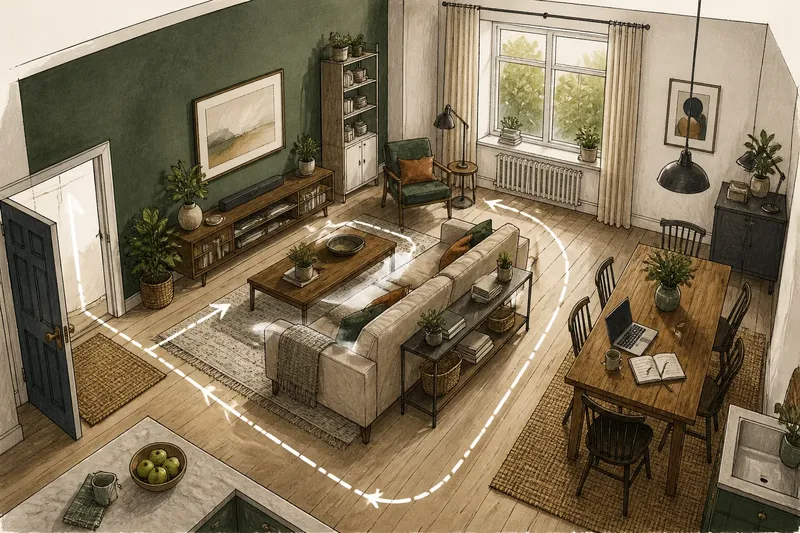
- If the room connects directly to a kitchen and stays in use through the day, then “living room” may describe it well; if a separate quiet area is its main purpose, consider “sitting room”.
- If the room is known by its position at the front of the home, then “front room” is a useful location-based label; if the plan needs to communicate function, add a role-based name.
- If residents use different names for the same space, then ask which term visitors or readers need to understand; if no single term is clear, describe its main activities in plain language.
- If a plan is for people unfamiliar with the household, then use a straightforward functional label; if it is a personal plan, choose the name residents already use.
Say a household has a front room with two armchairs, a hobby worktable and a sofa where everyone gathers after dinner. The starting point is a room used for guests and daily routines, with no separate reception space. The household notes that the sofa and worktable are used on ordinary evenings, then labels the room “living room” on its plan. The expected result is a label that reflects its dominant everyday use; if the plan also needs to signal guest seating, “living room and entertaining” makes that second role explicit.
Some homes have separate spaces for different purposes. One smaller room might be used for quiet conversation, while a larger room handles television, play and relaxing. Name each by its use rather than assuming one term is more refined or more correct.
Room names also depend on context and layout
Estate listings, floor plans and family conversations may use different labels. A listing might say “reception room”, while residents call the same space the front room. “Sitting room” often suggests a place to sit, relax or talk, but its level of formality depends on the household.
Doors and connections to other rooms can affect how people use a space. A room that can be closed off may suit quieter conversation, while an open-plan area beside a kitchen may take part in shared routines. Neither layout dictates a single correct name.
For a plan, choose a term that helps someone understand the room’s intended use. When describing an existing home, use the name residents recognise; it can convey how they organise shared life without implying that one arrangement is better.
Which room name fits your household?
Is a parlour the same as a living room?
They can refer to similar-looking rooms, but they may suggest different priorities. “Parlour” often leans towards receiving visitors, while “living room” commonly signals everyday shared use.
What does a sitting room mean?
A sitting room is a place for sitting, relaxing or talking, and its formality varies by household. The term often overlaps with “living room” rather than naming a wholly different kind of space.
Should a front room be called a parlour?
Use “parlour” if it reflects the room’s role or the tone the household wants to convey. “Front room” describes location, while “parlour” suggests a particular social use.
Can one room serve as both parlour and living room?
Yes. If a room supports daily routines as well as entertaining, call it a living room or describe both roles plainly, such as “living room used for entertaining”.
Let the name describe the room’s role
From parlour to living room, the terms can suggest a room for visits, everyday routines or both, but their meanings are not universal. Watch how people gather and what they do there, then choose a name that matches the room’s main use.
If you are labelling a plan, use a clear functional term. If you are naming a room at home, choose wording residents will recognise and that invites the way they want to use the space.